


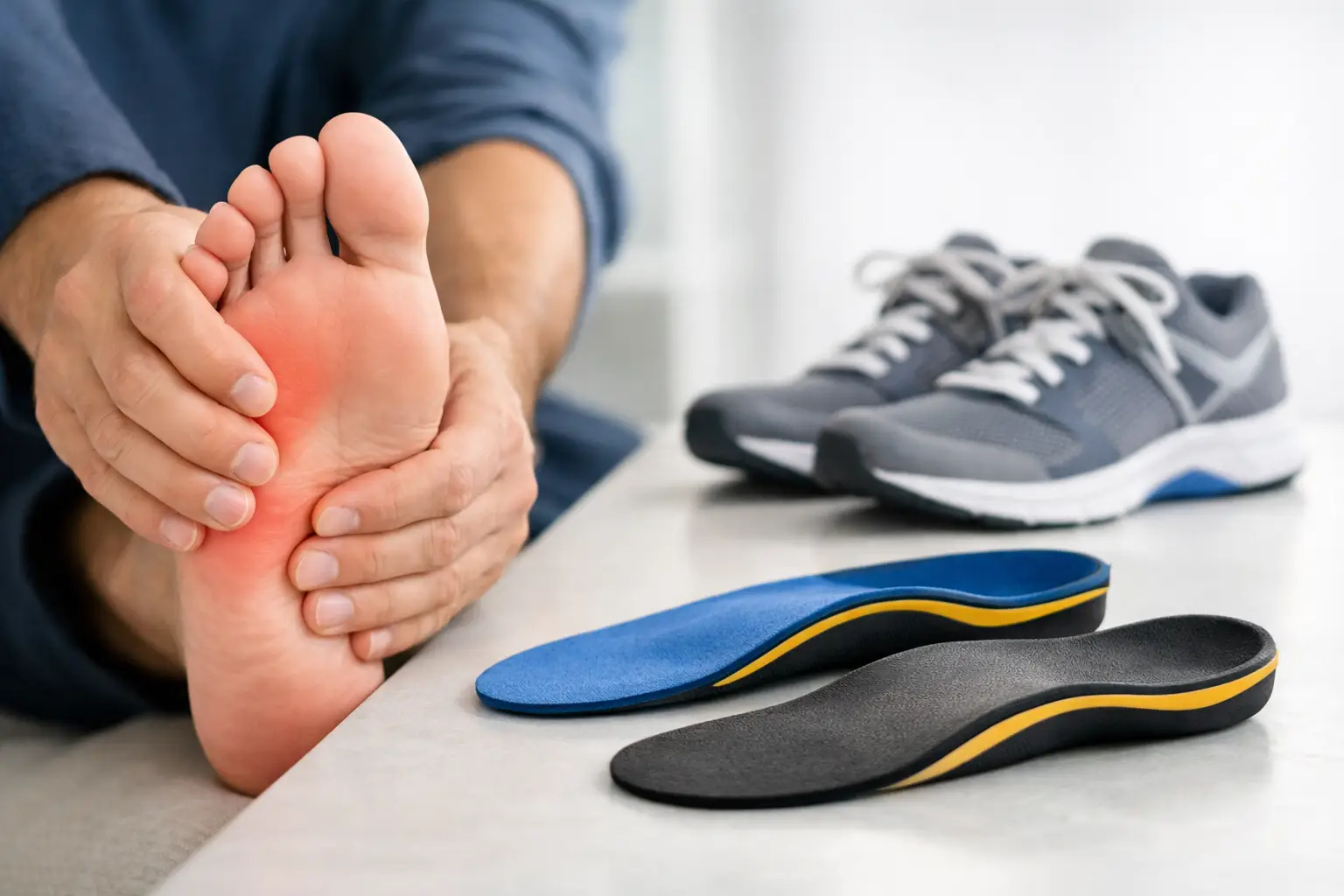
Custom Orthotics for Plantar Fasciitis
That sharp, first-step pain in the heel often leads people to the same question – will custom orthotics for plantar fasciitis actually fix it? The honest answer is that they can be very helpful, but only when they are prescribed for the right reason, built around the way your foot functions, and used as part of a wider treatment plan.
Plantar fasciitis is not simply a matter of needing more cushioning. It is usually a load-related problem involving irritation and strain at the plantar fascia, most often near its attachment into the heel. For some people, poor foot mechanics contribute to that strain. For others, the bigger drivers are training volume, prolonged standing, calf tightness, weight gain, unsuitable footwear or a sudden change in activity. That is why two people with similar heel pain may not need the same treatment.
When custom orthotics for plantar fasciitis make sense
Custom orthotics are designed to alter how force moves through the foot during walking and standing. In plantar fasciitis, their role is usually to reduce excessive strain on the plantar fascia, improve control through the arch, and redistribute pressure away from irritated tissues. They are not a cure in isolation, but they can create a more favourable environment for recovery.
This tends to matter most when heel pain is being maintained by an identifiable mechanical issue. That might be an overpronating foot, a very flat foot, a high-arched foot with poor shock absorption, or a gait pattern that repeatedly overloads the fascia. In these cases, a properly prescribed orthotic can reduce stress with each step, which is particularly useful for people who cannot simply stop walking, working or commuting.
They can also be useful for runners and active adults who need to keep moving while symptoms settle. The aim is not to mask pain and carry on regardless. It is to improve loading enough that rehabilitation is possible and flare-ups become less frequent.
Why diagnosis matters before orthotics are prescribed
Heel pain is common, but plantar fasciitis is not the only possible cause. Pain under the heel can also come from a plantar fascia tear, fat pad syndrome, nerve irritation, stress injury, inflammatory conditions or referred pain from elsewhere. If the diagnosis is wrong, the orthotic may be unhelpful or, in some cases, aggravating.
This is where a proper assessment becomes important. A structured podiatry examination looks at symptom history, tissue tenderness, foot posture, range of movement, calf function, walking pattern and the activities that trigger pain. When clinically indicated, diagnostic ultrasound can add further clarity by showing whether the fascia is thickened, irritated or structurally compromised. That helps guide whether orthotics are appropriate and what else needs to happen alongside them.
At South London Foot Clinic, that consult, scan, discuss, treat approach is designed to avoid guesswork. For patients, it means the treatment plan follows the diagnosis rather than the other way round.
What makes custom orthotics different from shop-bought insoles
This is where many people get understandably confused. There are plenty of insoles marketed for heel pain, and some do offer short-term relief. A well-chosen prefabricated insole can sometimes be enough, especially in milder cases or as an early step.
Custom orthotics are different because they are prescribed from an assessment of your foot shape, joint movement, loading pattern and symptoms. They are made to address how your foot functions, not just to add softness under the heel. The design can be adjusted in very specific ways, including arch profile, rearfoot control, forefoot posting, material choice and pressure redistribution.
That level of detail matters because plantar fasciitis does not behave the same way in every foot. A softer device may suit one person. Another may need firmer control to limit repeated overload. Someone who spends all day on hard floors may need something quite different from a runner trying to return to training.
Do orthotics cure plantar fasciitis?
Usually, no – and it is better to be clear about that.
Orthotics can reduce strain, improve comfort and support recovery, but they do not reverse every cause of heel pain on their own. If calf tightness is significant, that still needs to be addressed. If footwear is unstable or badly worn, that remains a problem. If someone has pushed through pain for months and the tissue is now more irritable, they may need a broader rehabilitation plan.
The most effective approach is often combined. That may include activity modification, stretching or strengthening work, footwear advice, hands-on treatment, taping, or in some cases injection therapy. The exact mix depends on how long the pain has been present, how severe it is, what the examination shows and whether the fascia is degenerative, inflamed or partially torn.
What to expect from the assessment and fitting process
The process should be clinical and specific, not a quick retail transaction. First comes diagnosis. That means understanding where the pain is, when it started, what makes it worse and whether there are contributing factors higher up the chain, such as ankle stiffness or changes in leg loading.
Once the need for orthotic therapy is established, the device is prescribed according to your presentation and the shoes you actually wear. There is little value in an orthotic that only fits one pair of shoes you rarely use. Practicality matters, especially for people balancing work footwear, trainers and day-to-day walking.
There is then an adjustment period. Even a well-made orthotic can feel unfamiliar at first because it changes foot mechanics. Most patients build up wear gradually. Follow-up is important because sometimes small modifications make a significant difference to comfort and effectiveness.
How long do custom orthotics take to work?
Some people notice a difference within days, particularly with walking comfort and first-step pain in the morning. For others, the benefit is more gradual. That is because the orthotic is not simply blocking pain. It is changing the forces acting through an irritated structure, and tissues often need time to settle.
If symptoms are longstanding, recovery may still take weeks or months even with the right support in place. That does not mean the orthotic is failing. It may mean the tissue has been overloaded for a long time and needs a more patient, staged programme.
What matters most is trend rather than perfection. Pain that becomes less intense, less frequent, or easier to settle after activity is often a sign that treatment is moving in the right direction.
When custom orthotics may not be enough
There are situations where orthotics help but do not fully resolve the problem. A very acute flare may need better short-term pain control. Persistent symptoms despite sensible treatment may need imaging review. If there is a significant plantar fascia tear, management changes. If the pain source is not actually the fascia, continuing with insoles alone can waste valuable time.
There is also the question of expectations. Orthotics do not usually make every shoe suitable, and they do not excuse repeated overload. If a patient returns immediately to high-impact activity without addressing training errors, recurrence is more likely.
This is why realistic planning matters. Good treatment is not about offering a single item. It is about matching the right intervention to the stage and cause of the condition.
Choosing the right treatment plan for heel pain
If you are considering custom orthotics for plantar fasciitis, the key question is not whether orthotics are good or bad. It is whether they are right for your specific heel pain.
For some patients, they are a central part of treatment and make walking, working and exercise much more manageable. For others, they are one useful element among several. And for a smaller group, they are not the priority at all.
The difference comes from assessment. A careful diagnosis gives you a clearer answer on what is causing the pain, whether orthotics are likely to help, and what else should happen alongside them. That is usually the fastest route to sensible treatment.
Heel pain often becomes frustrating because people try several things before they understand what is actually being treated. A more structured approach tends to save time, reduce uncertainty and make recovery feel more achievable. If your symptoms have persisted, the most helpful next step is not another generic insole – it is finding out exactly why the pain is there and treating it with that diagnosis in mind.