


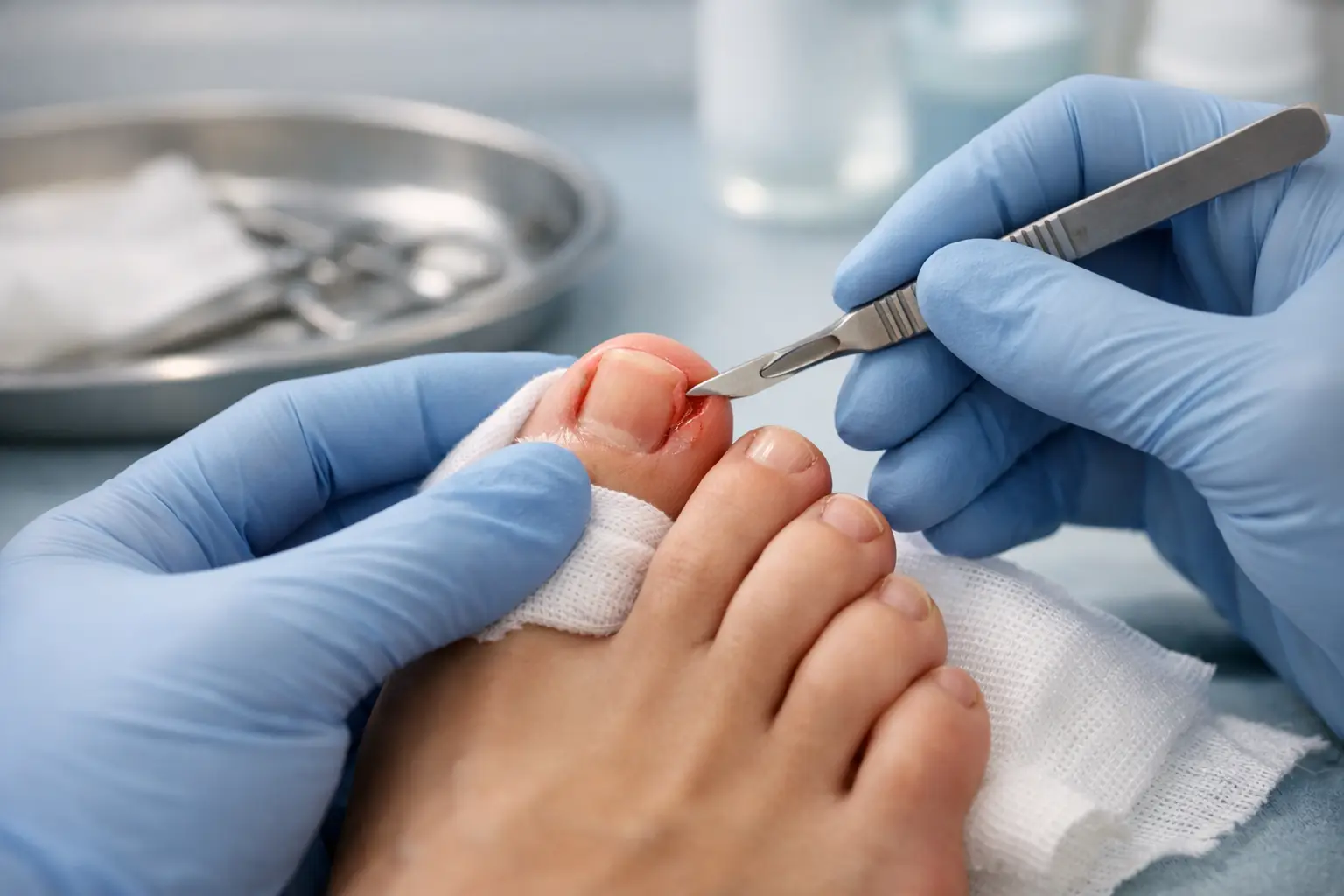
Ingrown Toenail Surgery: What to Expect
When a toenail keeps catching the skin at the side of the toe, the problem rarely stays minor for long. What begins as tenderness can turn into swelling, infection, difficulty walking and repeated courses of antibiotics that do not deal with the underlying cause. Ingrown toenail surgery is often the most reliable way to stop that cycle and restore comfort.
For many patients, the main concern is not whether the nail is painful – it is whether surgery is really necessary. That is a fair question. Not every ingrown toenail needs a procedure, but when the nail has become recurrent, infected or structurally unlikely to settle with conservative care, a minor surgical approach is often the most predictable treatment.
When ingrown toenail surgery is considered
An ingrown toenail develops when the edge of the nail presses into or pierces the surrounding skin. This usually affects the big toe, although other toes can be involved. Common causes include nail shape, poor nail cutting technique, pressure from footwear, trauma and a natural tendency for the nail edge to curve into the skin.
In the early stages, simple measures may help. These can include reducing pressure on the toe, modifying footwear, careful nail care and treating any local inflammation. The difficulty is that some nails are anatomically prone to repeating the same problem. If the toe is frequently painful, infected or bleeding, conservative treatment may only offer short-term relief.
Surgery is usually considered when there are repeated episodes, ongoing pain despite appropriate care, significant swelling at the nail border, or a build-up of proud flesh around the nail edge. It may also be recommended where infection keeps returning because the offending part of the nail remains in place.
What ingrown toenail surgery actually involves
The term surgery can sound more dramatic than the procedure itself. In podiatry practice, nail surgery is a well-established minor procedure carried out under local anaesthetic. The aim is to remove the part of the nail that is causing the problem, and in many cases to treat the nail root at that side so that the troublesome section does not grow back.
There are two main approaches. A partial nail procedure removes only the edge of the nail. This is the most common option when the rest of the nail is healthy and only one or both sides are ingrowing. A total nail procedure removes the whole nail and is usually reserved for more extensive nail disease or severe deformity.
In many cases, a chemical is applied to the nail matrix after the problematic section is removed. This reduces the chance of regrowth from that specific part of the nail. The result is usually a slightly narrower nail rather than a completely altered toe. For most patients, that trade-off is worthwhile if it means the pain and infection stop recurring.
Assessment before nail surgery
Good treatment starts with a proper assessment rather than a rushed decision. The appearance of the toe matters, but so does the history. A clinician will usually want to know how long the problem has been present, whether it has been infected, what treatment has already been tried and whether there are any health factors that could affect healing.
This is particularly important for patients with diabetes, circulatory problems, immune compromise or a history of delayed wound healing. Surgery is still possible in many cases, but it needs to be planned carefully and on the right clinical basis.
At South London Foot Clinic, treatment planning is led by assessment first. That matters because not every painful nail is truly ingrown, and not every ingrown nail needs the same procedure. Clear diagnosis helps patients understand both the reason for treatment and the expected result.
What happens on the day of ingrown toenail surgery
The procedure itself is usually straightforward. After the toe is cleaned, local anaesthetic is given to numb it fully. Patients often worry about this part most, but once the anaesthetic has taken effect, the procedure should not be painful.
The clinician then removes the offending section of nail, or the whole nail if that is the agreed plan. If a matrix treatment is being carried out to prevent regrowth, this is done once the nail portion has been lifted away. The toe is then dressed carefully.
Appointments are typically completed in clinic, and patients are able to go home the same day. You will usually be advised to bring suitable footwear that leaves room for the dressing, as a tight shoe straight after the procedure is unlikely to be comfortable.
Does ingrown toenail surgery hurt afterwards?
During the procedure, the local anaesthetic is designed to prevent pain. After it wears off, it is normal to have some soreness or throbbing, particularly on the first day. For most patients this is manageable with simple pain relief and sensible rest.
The level of discomfort afterwards varies. A straightforward partial nail procedure on a mildly inflamed toe is often easier than patients expect. A toe that has been badly infected or very swollen beforehand may feel more sensitive during the early recovery period. That difference is one reason why early treatment can be preferable to waiting until the problem becomes severe.
Recovery after ingrown toenail surgery
Recovery is not usually difficult, but it does depend on following the aftercare properly. The toe needs to be kept clean, the dressings changed as instructed and activity adjusted in the early phase. Most patients can return to normal day-to-day movement fairly quickly, but high-impact activity, sport and prolonged time on the feet may need to wait until healing is further along.
There is often a small amount of drainage from the toe for a period after surgery, especially where a matrix treatment has been used. This can be entirely normal and does not necessarily mean infection. What matters is the pattern – whether the toe is steadily settling or becoming more painful, red or swollen.
Healing times vary. Some patients are comfortable in ordinary footwear within a few days, while others need longer depending on the severity of the original problem, the procedure performed and their general health. A realistic discussion about recovery is better than promising a fixed timeline that may not fit everyone.
Risks and trade-offs to understand
Ingrown toenail surgery is generally safe and effective, but no procedure is completely free of risk. There can be infection, delayed healing, prolonged drainage, regrowth of the nail edge or an unsatisfactory cosmetic result. In some cases, a small section of nail may regrow despite matrix treatment and require review.
There is also the question of appearance. A partial procedure usually leaves a narrower nail, and a total nail procedure leaves no nail if regrowth has been intentionally prevented. Most patients seeking surgery are focused on pain relief and reliability rather than cosmetic perfection, but it is still worth discussing this in advance.
It also depends on the cause. If tight footwear, repeated trauma or poor nail cutting continues afterwards, surrounding tissues may remain irritated even when the original nail spike has been removed. Surgery solves the structural nail problem, but long-term success is helped by sensible footwear and nail care.
When not to leave it any longer
A painful nail is easy to put off, particularly if the symptoms come and go. The problem is that repeated inflammation can make the tissue more swollen and the procedure less straightforward than it would have been earlier. If the toe is repeatedly infected, producing discharge, bleeding easily or affecting the way you walk, it is sensible to have it assessed.
This is even more important if you have diabetes, reduced sensation, poor circulation or difficulty seeing or reaching your feet. In those situations, trying to manage an ingrown nail at home can lead to avoidable complications.
Why expert assessment makes a difference
The best outcomes usually come from matching the treatment to the severity and pattern of the problem. Some patients need conservative care and advice. Others need a minor procedure because the nail has shown it is not going to settle on its own. The value of specialist podiatry lies in making that distinction clearly and early.
A structured consultation gives you more than a procedure date. It should explain what is causing the problem, whether surgery is the most suitable option, what type of procedure is appropriate and how recovery will be managed. That clarity helps reduce uncertainty and gives patients realistic expectations from the outset.
If you have been dealing with the same painful toenail for months, the right next step is not to keep trimming it and hoping for a different outcome. It is to have it properly assessed, understand why it keeps returning and choose treatment that deals with the cause rather than the flare-up.