


Swift Treatment Review for Stubborn Verrucas
A verruca that has persisted through pharmacy treatments, acids or repeated freezing can be frustrating, particularly when it is painful to walk on, affecting sport or simply refusing to clear. This Swift treatment review explains what Swift microwave therapy involves, what results can realistically look like and why a proper podiatry assessment should come before deciding whether it is the right option for you.
What is Swift treatment?
Swift is a medical microwave treatment used for verrucas. Verrucas are caused by strains of the human papillomavirus and commonly appear on the soles of the feet. They may look like a rough, thickened area of skin, sometimes with tiny black dots, and can be mistaken for a corn or callus.
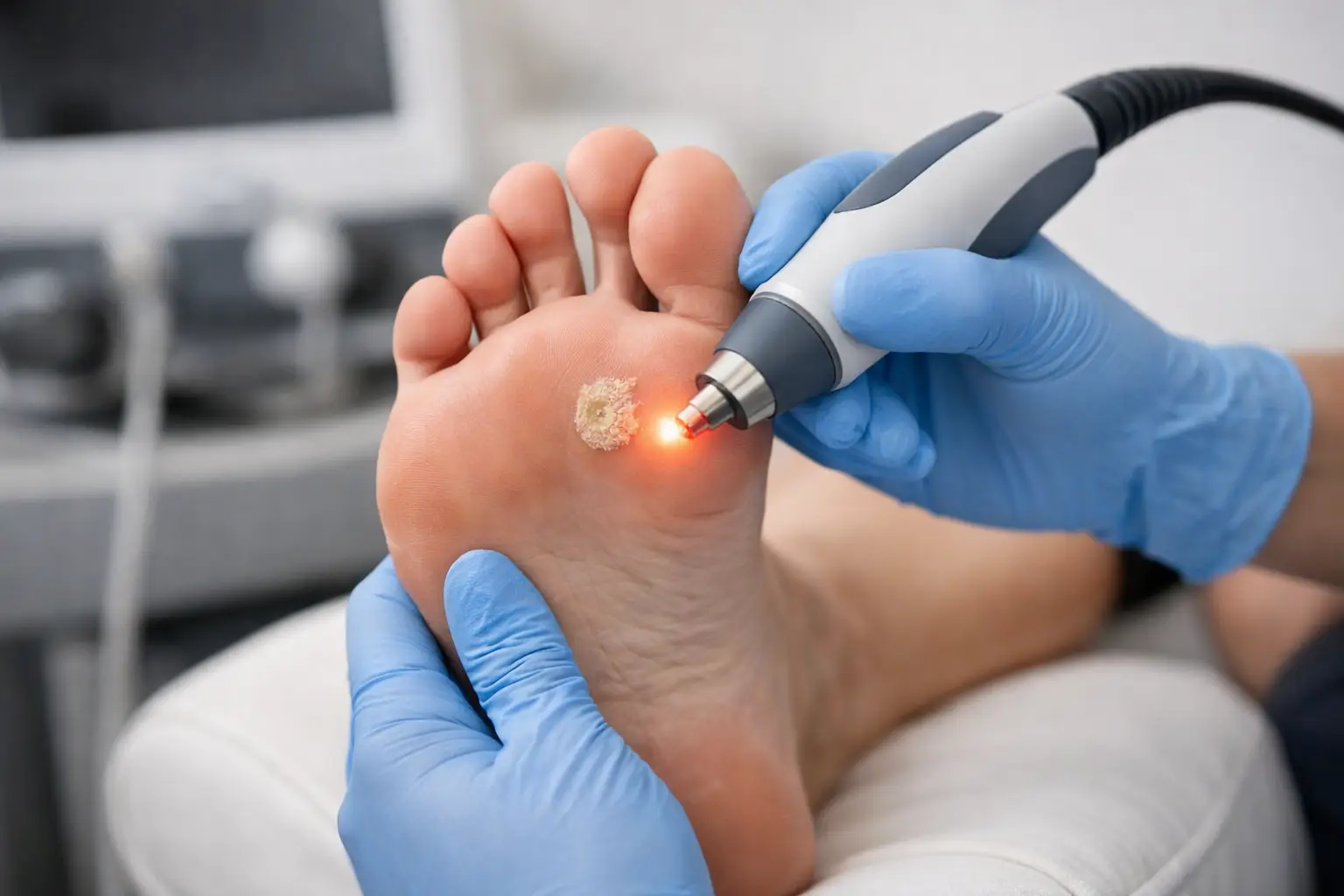
During treatment, a clinician applies a handheld probe to the verruca for a brief, controlled delivery of microwave energy. This creates a localised heating effect within the affected tissue. The aim is not to cut away the verruca or freeze it, but to stimulate the body’s immune response so it can better recognise and address the viral infection.
This distinction matters. A verruca is not just a surface skin problem. Removing hard skin may reduce pressure and discomfort, but it does not necessarily resolve the virus within the skin. Swift treatment is intended to support an immune response while avoiding an open wound.
Swift treatment review: what happens at an appointment?
A worthwhile treatment plan starts by confirming the diagnosis. Not every painful lesion under the foot is a verruca, and treating a corn, callus or another skin lesion as though it were viral would be inappropriate. A podiatrist will assess the appearance of the lesion, its location, the pattern of skin lines and how it responds to pressure. Hard skin may be reduced where clinically useful to improve comfort and allow clearer assessment.
The clinician should also ask about how long the lesion has been present, previous treatments, pain levels and relevant medical history. Circulation, sensation and skin health are particularly important where there is diabetes, neuropathy, reduced healing capacity or a history of vascular problems.
Once Swift is considered suitable, the microwave applications themselves are very brief. The number of applications depends on the size, depth and distribution of the verruca. A single isolated lesion may be approached differently from a cluster of mosaic verrucas spread across the sole of the foot.
Most treatment pathways involve several appointments, usually spaced over a number of weeks. This gives the immune system time to respond between sessions. The precise schedule should be based on clinical progress rather than a fixed promise that every verruca will clear after the same number of treatments.
Does Swift treatment hurt?
Swift treatment can be uncomfortable. Patients often describe a short, sharp heat sensation during each application, which settles quickly once the probe is removed. The intensity varies considerably according to the site of the verruca, its size and an individual’s sensitivity.
For many people, the brief discomfort is preferable to treatments that create prolonged soreness, blistering or a wound. However, that is a personal judgement rather than a universal rule. Verrucas on weight-bearing areas can remain tender afterwards because pressure from walking continues to irritate the area.
You can normally return to usual daily activities after the appointment. Some tenderness is possible for a short period, and activity may need to be adjusted if the lesion is in an area that receives high impact from running, court sports or long shifts on your feet. Your clinician should give clear aftercare advice based on the location treated and your planned activity.
Potential benefits of microwave verruca treatment
One of the practical advantages of Swift is that it does not rely on creating a chemical burn or removing a large amount of tissue. There is generally no dressing regime, no open wound to manage and less disruption to normal washing and footwear than with some destructive treatments.
It may be particularly worth discussing when a verruca has been present for a long time, has resisted over-the-counter products or is interfering with activity. It can also be considered for people who want an option that does not involve daily home application of acid-based products.
The treatment is delivered by a trained clinician and can be reviewed at each visit. That means the response can be monitored, hard skin can be managed where necessary and the plan can be adjusted if the lesion is not changing as expected. This is often more useful than repeatedly applying the same home treatment without being certain of the diagnosis.
What are the limitations?
No verruca treatment can guarantee clearance. Verrucas can resolve naturally, persist for years or recur, and the immune response differs from person to person. A positive response may take time to become visible, so judging the outcome too early can be misleading.
Swift may not be the most appropriate first choice for every patient. Very small, recent and symptom-free verrucas may not require active treatment at all. In other cases, simple reduction of painful hard skin, pressure offloading or a different treatment method may be more suitable.
Medical history also affects the decision. Patients with reduced sensation, poor circulation, healing concerns, certain skin conditions or complex medical needs require a more cautious assessment. Suitability for people who are pregnant or who have implanted electronic devices should be discussed with the treating clinician, with further advice sought where needed.
Cost is another consideration. Private microwave treatment is usually delivered as a course rather than a single isolated session, so it is sensible to understand the anticipated number of appointments, review points and what happens if the verruca does not respond. A clear clinic should explain this before treatment begins rather than presenting a single approach as appropriate for everyone.
How to judge whether treatment is working
Improvement is not always immediate. Early signs can include less pain on direct pressure, a reduction in the thickened skin over the lesion and a gradual return of normal skin lines. The black dots associated with small blood vessels may reduce, although appearance alone is not enough to confirm resolution.
A podiatry review allows the lesion to be assessed properly. The clinician can compare size, skin pattern and tenderness over time, rather than relying solely on photographs or how the area looks after bathing. If there is little change after an appropriate review period, the plan may need to be reconsidered.
This may involve continuing treatment, changing the interval between sessions, combining treatment with pressure management or revisiting the diagnosis. That structured approach is especially valuable for lesions that have been labelled as verrucas for months without a clear response.
Choosing a clinically guided treatment plan
The best Swift treatment review is not simply whether the technology sounds appealing. It is whether the treatment is being recommended for a confirmed verruca, with your symptoms, medical history and activity levels taken into account.
At South London Foot Clinic, verruca treatment begins with assessment and explanation, so patients understand what is causing discomfort and what each option is designed to achieve. If Swift is appropriate, it should sit within a realistic plan that includes review, aftercare and a clear discussion of alternatives.
A persistent verruca deserves more than repeated guesswork. A focused podiatry assessment can establish what the lesion is, why it is painful and whether Swift treatment offers a sensible next step for your foot health.