


Swift Treatment vs Acid Therapy for Verrucas
A verruca can look minor but become surprisingly disruptive. Pain when walking, changing how you place your foot, and repeated unsuccessful home treatments can all make a small skin lesion feel like a persistent problem. When comparing Swift treatment vs acid therapy, the right option depends on the verruca’s location, duration, size, previous treatment, your general health and how much treatment burden is realistic for you.
Both approaches are used to manage verrucae, but they work in very different ways. Acid therapy gradually removes infected skin at the surface. Swift treatment uses controlled microwave energy to create a local response within the tissue. Neither is an instant cure for every patient, and a structured assessment is the best starting point when a lesion is painful, persistent or unclear.
Swift treatment vs acid therapy: the key difference
Verrucae are caused by strains of the human papillomavirus entering the outer layer of skin, often through tiny breaks on the sole of the foot. They may have a rough surface, interrupt normal skin lines and contain small dark dots caused by tiny blood vessels. However, not every hard or painful area on the foot is a verruca. Corns, callus, foreign bodies and some other skin lesions can appear similar, which is why diagnosis matters before choosing a treatment.
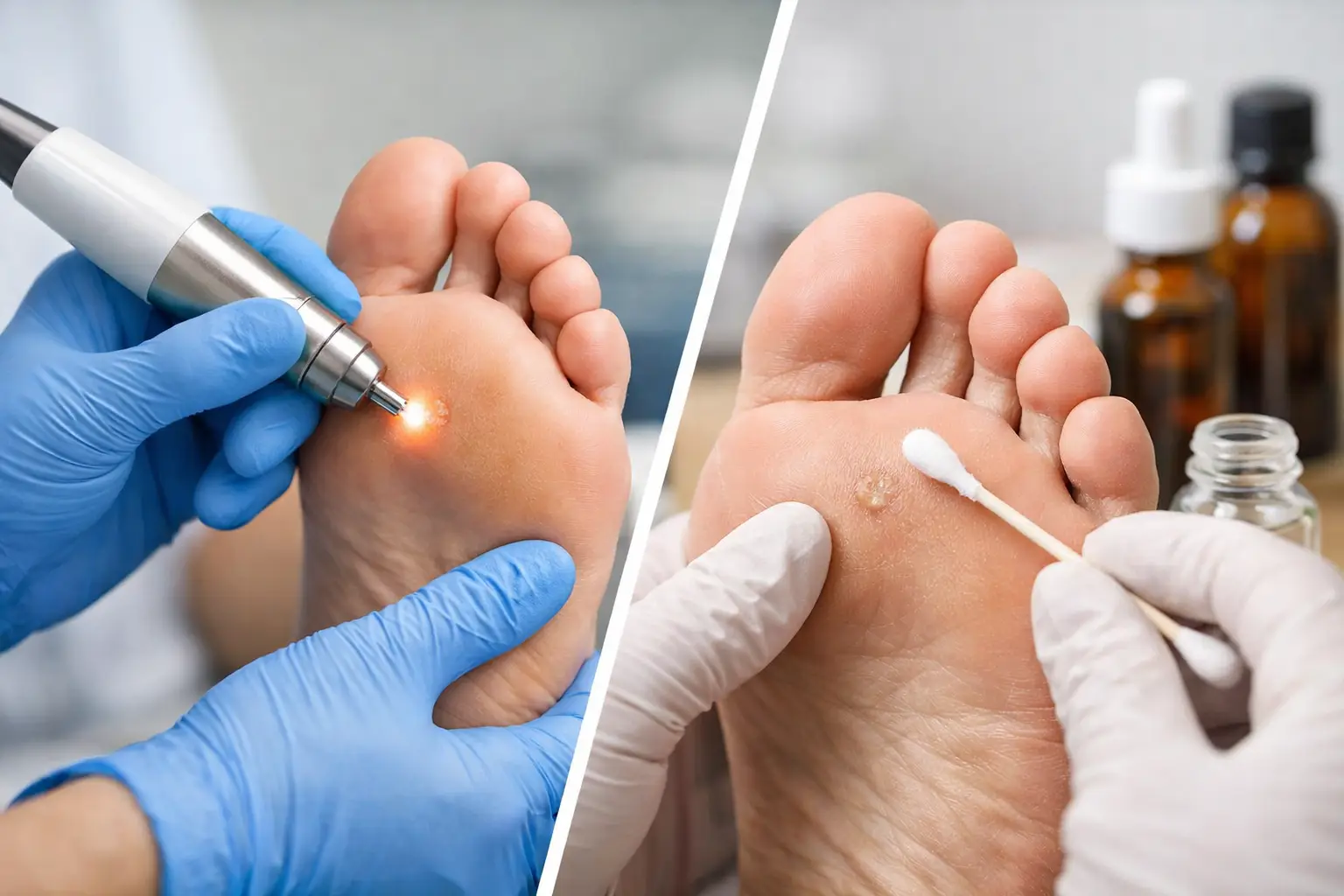
Acid therapy usually involves salicylic acid in a liquid, gel, ointment or medicated plaster. It is a keratolytic treatment, meaning it softens and breaks down the thickened outer skin that builds up over the lesion. The aim is to reduce the infected tissue gradually, allowing healthy skin to replace it over time.
Swift treatment is a clinician-delivered microwave treatment. A small probe applies a short, controlled dose of microwave energy to the verruca. This produces a localised thermal effect beneath the surface of the skin and is intended to stimulate the body’s immune response to the virus. It does not involve cutting the verruca out, freezing it or applying a chemical to the skin.
The practical distinction is straightforward: acid therapy requires consistent treatment at home, often over many weeks, while Swift is delivered during a series of clinic appointments. The more clinically relevant distinction is that the treatments place the work in different places – acid works primarily by steadily removing surface tissue, whereas Swift seeks to encourage an immune response within the affected area.
Acid therapy: a gradual home-based option
For an uncomplicated verruca, acid treatment may be an appropriate first option. It is widely available, comparatively inexpensive and can be effective when used carefully and consistently. The difficulty is that consistency is not a small detail. Treatment often needs to be applied daily for weeks and sometimes longer, with regular removal of softened hard skin as advised by a podiatrist.
Acid therapy tends to suit patients who are comfortable following a routine and whose skin is otherwise healthy. It may be less appealing when the verruca is very painful, has been present for a long time, is covered by substantial hard skin, or when previous treatment has been irregular or unsuccessful.
The main risk with over-the-counter acid products is damage to healthy skin. Applying too much product, allowing it to spread beyond the lesion or using it on broken skin can cause soreness, irritation or ulceration. It should not be used without professional guidance if you have diabetes, reduced sensation in your feet, poor circulation, a history of foot ulceration or an uncertain diagnosis. In these situations, self-treatment can create a problem that is more significant than the verruca itself.
Acid treatment also requires patience. Some verrucae improve slowly, and a lesion can look worse before it looks better as hard skin softens and sheds. That does not automatically mean the treatment is failing, but persistent pain or no meaningful change after an appropriate course should prompt reassessment rather than simply increasing the amount of acid used.
Swift treatment: a clinic-based approach
Swift may be considered for stubborn, painful or recurrent verrucae, particularly where home acid treatment has not produced a satisfactory result. Treatment is delivered in short applications during an appointment. The sensation is often described as sharp and intense, but it is brief. Your podiatrist can explain what to expect, assess your tolerance and discuss whether the likely discomfort is acceptable for you.
A course commonly involves several sessions spaced over a number of weeks, although the exact schedule depends on the lesion and your response. The skin does not usually require a wound dressing afterwards, and many people can return to normal daily activity straight away. Tenderness can occur after treatment, especially where a verruca is on a weight-bearing area.
Swift is not necessarily the best choice simply because it is a newer or more technology-led treatment. It is generally more expensive than acid therapy and still relies on the body mounting an appropriate response. Some verrucae need more treatment than expected, and some do not resolve despite a properly delivered course. A responsible discussion should include this uncertainty rather than suggesting guaranteed clearance.
It may be particularly useful when daily self-treatment is difficult to sustain, when the lesion has persisted despite a well-followed acid regimen, or where the amount of hard skin and pain makes home management impractical. It is not suitable for everyone, so a clinician should review your medical history and any relevant contraindications before treatment is planned.
What does treatment feel like?
With acid therapy, discomfort is usually related to irritation of surrounding skin or pressure from the verruca itself. Careful application and regular podiatry reduction of hard skin can improve comfort.
With Swift, discomfort happens principally during the brief microwave application and may be followed by local tenderness. Pain varies according to the site, depth and sensitivity of the lesion. Verrucae beneath the ball of the foot or heel can be more uncomfortable because they are repeatedly loaded during walking.
Which option is likely to suit you?
The decision is rarely based on one factor. A single, recent, non-painful verruca may reasonably be managed conservatively with acid therapy and review. A long-standing lesion that hurts on every step, has spread into a cluster, or has not changed after months of correct home treatment may justify discussion of Swift or another procedural approach.
Your lifestyle matters as well. Runners, people who stand for work and those with active jobs may prioritise reducing pain and limiting repeated disruption. Others may prefer the lower upfront cost and control of an acid-based routine. There is no universal winner between Swift treatment and acid therapy because the most suitable pathway must balance clinical findings with convenience, cost, tolerance and treatment history.
A podiatry assessment should also consider whether the lesion is definitely a verruca. Squeezing pain from the sides, interrupted skin lines and pinpoint bleeding after careful reduction can support the diagnosis, but assessment is more reliable than self-diagnosis from appearance alone. If there is bleeding, rapid change, unusual pigmentation, ulceration or significant uncertainty, do not use acid until the area has been examined.
A structured treatment plan gives clearer answers
At South London Foot Clinic, verruca treatment begins with examination rather than an assumption. The affected skin can be assessed, hard skin reduced where appropriate, and the diagnosis explained clearly before treatment options are discussed. This helps distinguish a true treatment-resistant verruca from a lesion that has been treated inconsistently, incorrectly or for the wrong condition.
If acid therapy is appropriate, you should leave with clear instructions on application, protection of surrounding skin and when to review progress. If Swift is being considered, the discussion should cover the expected number of sessions, likely discomfort, aftercare and the fact that response varies between patients. A plan is more useful when it includes a review point, rather than leaving you to continue treatment indefinitely without knowing whether it is helping.
Verrucae can test patience, but they do not need to be managed by guesswork. A clear diagnosis and a treatment plan matched to the lesion give you the best basis for deciding whether steady home treatment or a clinic-based approach is the more sensible next step.