


Achilles Tendinopathy Guide for Lasting Recovery
A painful Achilles can make the first few steps in the morning feel disproportionately difficult. It may settle after moving around, then return after a run, a long walk or a busy day on your feet. This Achilles tendinopathy guide explains what may be happening, why a clear diagnosis matters and how treatment is usually planned around your symptoms, tendon location and activity goals.
What is Achilles tendinopathy?
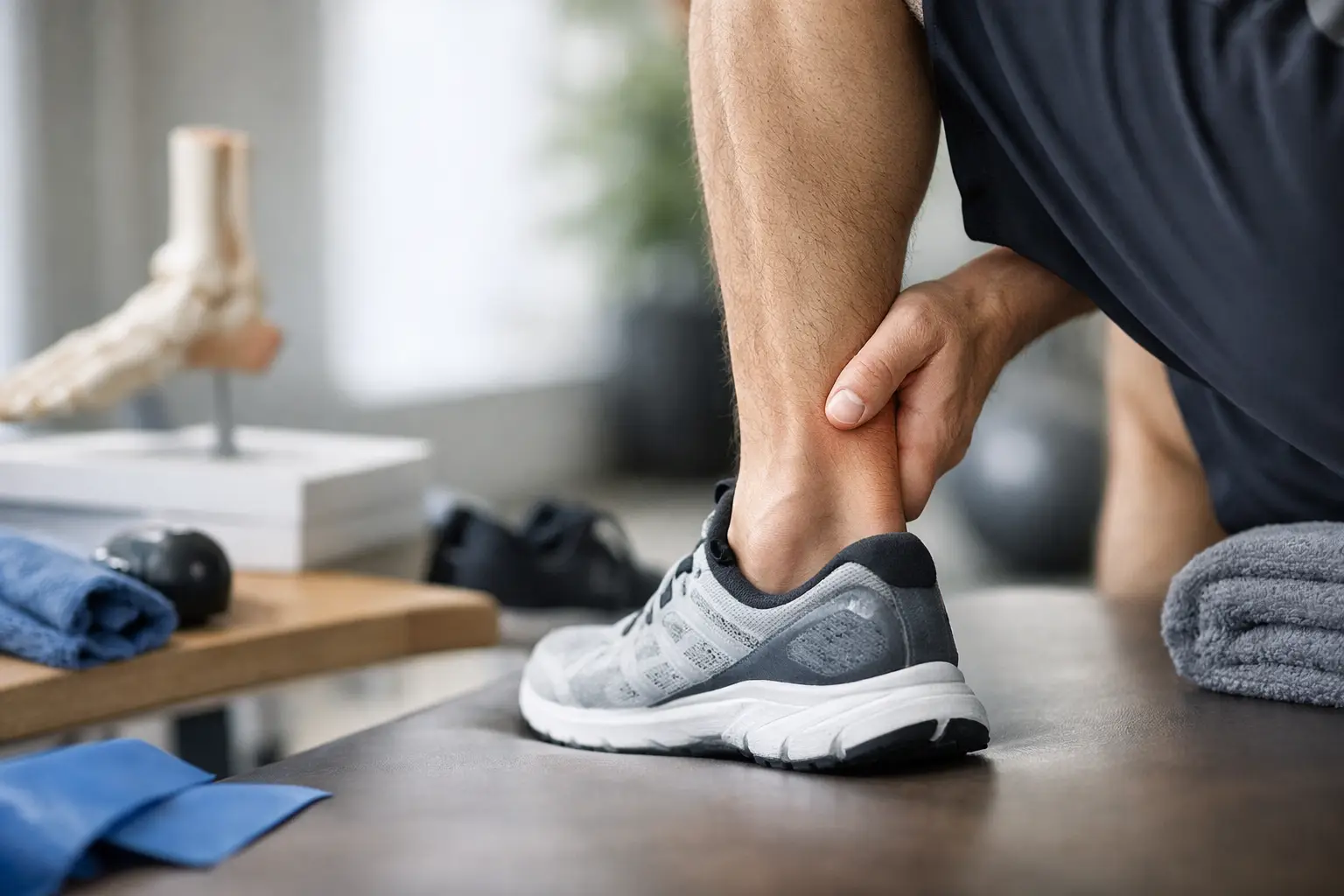
Achilles tendinopathy is pain and reduced tolerance in the tendon that connects the calf muscles to the heel bone. The tendon transmits a large amount of force when you walk briskly, climb stairs, run, jump or push off the ground. When its current capacity is lower than the load being placed upon it, the tendon can become painful and irritable.
The term does not simply mean inflammation. In many cases, particularly where symptoms have been present for several weeks or longer, the tendon has undergone changes in its structure and ability to manage load. This is why a treatment plan based only on rest or anti-inflammatory measures may provide short-term relief without properly addressing the cause.
There are two common locations. Mid-portion Achilles tendinopathy affects the tendon around 2 to 6 cm above the heel. Insertional Achilles tendinopathy affects the point where the tendon attaches to the heel bone. They can feel similar, but they are not managed in exactly the same way. Insertional pain can be more sensitive to compression from footwear, uphill walking and deep calf stretching.
Common symptoms and patterns
Symptoms often build gradually rather than beginning with one memorable injury. You may notice stiffness when getting out of bed, pain at the start of exercise that eases once warm, tenderness when squeezing the tendon, or a thickened area compared with the other side. As symptoms progress, pain may remain during activity or affect normal walking.
A recent increase in running distance, faster sessions, hill work, returning to sport after a break or changing footwear can be relevant. However, tendinopathy is not only a runners’ problem. It can also occur in people whose work involves prolonged standing or walking, those who have become less active and then increased activity quickly, and people with reduced calf strength or ankle movement.
Age, previous tendon pain, some medications and wider health factors can also influence tendon health. The useful question is not simply, “What exercise caused this?” It is whether your tendon has had a manageable progression of load over time.
When Achilles pain needs prompt assessment
A sudden sharp pain, a feeling of being kicked in the back of the leg, a pop, marked swelling or an inability to push off normally may indicate an Achilles rupture rather than tendinopathy. This needs urgent medical assessment.
Assessment is also advisable if you have significant redness, heat, fever, calf swelling, unexplained night pain, altered sensation, or pain that does not fit a typical tendon pattern. Heel pain may arise from several structures, including the bursae around the heel, the plantar fascia, the ankle joint, a stress injury or referred pain from elsewhere in the leg. Treating every painful Achilles as tendinopathy risks delaying the right care.
Why diagnosis should come before treatment
A structured consultation begins with the history of your symptoms: when they started, what aggravates them, what activity you want to return to and what you have already tried. A podiatry examination then considers tendon tenderness and thickness, calf strength, ankle movement, walking pattern, footwear and the contribution of the foot and lower limb.
Diagnostic ultrasound may be appropriate where the clinical findings need clarification. It can help identify tendon thickening, changes within the tendon, surrounding fluid, a partial tear or involvement at the insertion. It is not required for every patient, and a scan result should never be considered in isolation. Some people have visible tendon changes with little pain, while others have substantial symptoms with more modest imaging findings.
The purpose of imaging is to improve treatment decisions, not to create unnecessary concern. At South London Foot Clinic, ultrasound can be incorporated into the assessment when clinically indicated, allowing the findings and next steps to be discussed in the same appointment.
Achilles tendinopathy guide: treatment in stages
Most Achilles tendinopathy improves through a gradual, well-monitored loading programme. The exact exercises, pace and modifications depend on whether the problem is mid-portion or insertional, how irritable the tendon is and the demands of your work or sport.
Settle an irritable tendon without complete rest
In the early stage, the aim is to reduce aggravating load enough for symptoms to settle while keeping the tendon active. This may mean temporarily reducing running volume, avoiding hills or speed work, shortening walks, or changing gym exercises. Complete rest for long periods usually reduces calf capacity further, making a return to activity harder.
Pain monitoring is useful. Mild discomfort during rehabilitation can be acceptable if it remains controlled and does not lead to a significant increase in pain or stiffness the following morning. A tendon that is consistently more painful for the next 24 hours is often being asked to do too much too soon.
Footwear can make a practical difference. A supportive shoe with a slightly raised heel may reduce strain temporarily for some patients, particularly with insertional symptoms. This is not a cure, and long-term reliance on a heel raise is not always appropriate, but it can help make daily activity more tolerable while rehabilitation progresses.
Rebuild calf and tendon capacity
Strengthening is the central part of treatment. Early exercises may use isometric calf holds or controlled heel raises, progressing to heavier and slower resistance work as symptoms permit. The goal is not merely to perform an exercise list. It is to restore the calf’s ability to manage the forces required for your normal life.
For mid-portion symptoms, heel raises may eventually be performed through a greater range of movement. For insertional tendinopathy, exercises are often modified initially to avoid dropping the heel below level, as this can compress the painful attachment against the heel bone. This distinction is one reason generic online programmes can be unhelpful.
A programme should be progressed using objective markers such as heel-raise strength, walking tolerance, morning stiffness and response to previous sessions. Recovery is rarely linear. A good week does not always mean the tendon is ready for a sudden return to previous mileage or competitive sport.
Return to running, sport and higher demand
Running and jumping are reintroduced when day-to-day pain is settled, calf strength is improving and the tendon is tolerating controlled loading. The initial return may be short, flat and slow, with rest days between sessions. Hills, speed sessions and plyometric work are usually added later because they place greater demand on the tendon.
For an active person, the trade-off can be frustrating: reducing training now may protect the ability to train consistently later. Cross-training options can maintain fitness where they do not provoke symptoms, but suitability varies. Cycling, swimming and gym work may be useful for one person and aggravating for another.
Where orthotics and other treatments may fit
Orthotics are not automatically required for Achilles pain. They may be considered where assessment identifies a foot position or movement pattern that is increasing tendon demand, or where footwear modification alone is insufficient. Their role is to support load management alongside rehabilitation, not replace strengthening.
Hands-on treatment may help address associated calf, foot or lower-limb restriction where clinically relevant, but it should form part of a wider plan. Similarly, injection treatment around the Achilles requires careful diagnosis and discussion. Steroid injection directly into or very close to the Achilles tendon is generally approached with considerable caution because of tendon safety concerns. Other interventions may be considered in selected cases, but only when the diagnosis, likely benefit and risks are clear.
Persistent symptoms do not necessarily mean that a tendon is permanently damaged or that surgery is inevitable. They do mean the plan may need reviewing. This can include reassessing the diagnosis, checking exercise technique and dosage, reviewing footwear and activity demands, or investigating whether another structure is contributing to pain.
How long does recovery take?
Many people notice improvement in pain and confidence within weeks of following an appropriate plan, but meaningful tendon rehabilitation often takes several months. Long-standing symptoms, repeated flare-ups, high sporting demands and inconsistent loading can extend the timeline.
The aim is not simply a pain-free day. It is a tendon that can tolerate the walking, work, exercise or sport that matters to you without repeated setbacks. A clear assessment gives you a starting point, and a staged plan gives each improvement a practical purpose: build capacity carefully, review the response and progress when the tendon is ready.